Event 1
Frank Carter murders
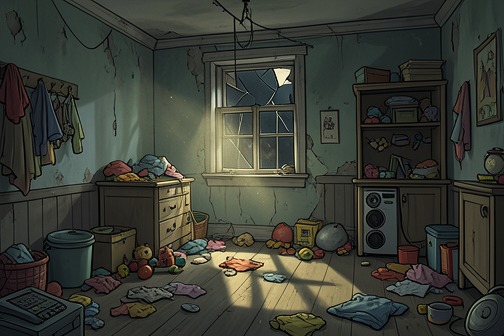
[Frank Carter murders](entity:event-recall-event-bdc09e20c3ad) are the child-abduction and murder series that defined [Frank Carter](entity:character-recall-character-28c9657c3214) as the Whisper Man and left a wound in [Featherbank](entity:location-recall-location-featherbank-8a7b4926752a) that imprisonment could not close. Carter was eventually caught by [Pete Willis](entity:character-recall-character-0a3c0fbc4dbc), but the cases remain significant because punishment ended Carter’s freedom without restoring every victim, answering every family’s questions, or returning every child home.
## Crimes and the Whisper Man
Frank Carter kidnapped and murdered five young boys in Featherbank twenty years before the main investigation. The victims were described as vulnerable and neglected children whom Carter befriended before taking them away. His method gave rise to the name the Whisper Man: he was believed to speak quietly to children at night outside their windows. Pete Willis regarded the nickname with particular horror and refused to use it, treating the words almost as a curse rather than as a sensational label.
The murders became a case of physical horror as well as psychological intrusion. When Pete entered the extension Frank Carter had built onto his house, he encountered the remains of what had happened there through sights and sensations that came to him in rapid succession, accompanied by the hot smell of rotting meat. Four little boys had been killed in the house by the time Carter was identified. Pete initially believed that the discovery of a real name and four known victims meant the nightmare was nearly over, even though Carter himself was still at large.
## [Tony Smith](entity:character-recall-character-010676947fb5) and the Unfinished Case
That expectation collapsed when Pete returned to the police department and saw Miranda and [Alan Smith](entity:character-recall-character-9f7e57d759aa) waiting in reception. Their son, Tony Smith, was missing. The parents appeared physically exhausted and stunned, and their child remained absent not merely during the immediate investigation but for the next twenty years. Tony’s disappearance transformed the murders from a case that could be counted and closed into an open obligation that Pete could not relinquish.
Frank Carter remained free for a day and a half before his van was stopped on a country road nearly a hundred miles from Featherbank. Forensic evidence showed that Tony Smith had been held in the back of the van, and Carter admitted killing him, but he refused to say where he had discarded the boy’s body. Searches followed along the many routes Carter might have taken. The searchers gradually dwindled; two decades later, Pete Willis was the only person still looking. Miranda and Alan Smith had moved away and rebuilt their lives, while their daughter Claire, born in the troubled years after Tony’s murder, had turned sixteen. Pete attached no blame to them, but he could not accept an ending in which a little boy was still missing.
## Evidence, Arrest, and Later Echoes
The later investigation repeatedly contrasts Carter’s known methods with the crimes that follow. When a boy is found lying spread-eagled beneath a canopy beside an old television, his blue tracksuit pants, backpack, and Minecraft T-shirt provide recognizable details, but the scene contains no real blood and not enough blood for the injuries. Pete therefore concludes that the boy was killed elsewhere. Carter, by contrast, had killed his victims where Pete found them and kept them in his house rather than attempting to dump their remains. The comparison establishes Carter’s murders as a concrete investigative pattern and makes every deviation from it meaningful.
A second body is later reported at a house on Garholt Street. These remains are much older and appear to have been hidden for a long time. Forensic examination identifies them as those of a male child who had been around six years old at death. The cause cannot yet be determined, and the remains may have been more than twenty years old. The body is recovered in a cardboard box, with clothing beneath the bones, turning the long-missing child into physical evidence while also emphasizing how little of the victim survives.
[Norman Collins](entity:character-recall-character-50cf1f055de4) eventually identifies the remains as Tony Smith. He recounts going to the house on Garholt Street, paying more money to [Julian Simpson](entity:character-recall-character-25d6931afb52), waiting in a downstairs room, and receiving a sealed cardboard box that Simpson opened carefully. The recognition is devastating rather than clarifying; Collins describes the experience as like standing in hell. Tony’s identification resolves the central uncertainty surrounding the fifth victim’s fate, but it also confirms that the family and Pete endured two decades without the body or the truth.
## Consequences and Continuing Significance
Frank Carter’s arrest and eventual imprisonment deliver one form of justice, but the murders expose the difference between capturing a killer and bringing victims home. Pete’s guiding belief is that everybody should get to go home. His continued searches therefore function as a duty to the dead and to their families, not simply as professional persistence. Tony’s remains finally provide a burial and an identity, yet the delay has already shaped the lives of the Smith family and Pete himself.
The case also remains embedded in the architecture of Featherbank. Carter’s crimes are associated with a house extension containing the evidence of his earlier murders, while later houses acquire an uncanny power of their own: windows seem to watch, and a building can resemble a bruised or lopsided face. The recurrence of houses, windows, hidden rooms, boxes, and bodies makes domestic space inseparable from the danger Carter represents. A home can be a place where children should be protected, but in the history of the Whisper Man murders it can also become the instrument and container of concealment.
Twenty years after the original killings, Carter’s name still produces fear, and the investigation of new disappearances repeatedly returns to his example. Pete’s reaction to the name, his refusal to let Tony’s case rest, and [Amanda Beck](entity:character-recall-character-4f3dbd72b237)’s determination that [Jake Kennedy](entity:character-recall-character-1a02454cdfce) will not become another lost child show how the murders continue to govern the conduct of those who survived them. The series is therefore not only a record of five killings; it is an enduring structure of memory, evidence, unfinished mourning, and vigilance.
Event 2
Neil Spencer abduction
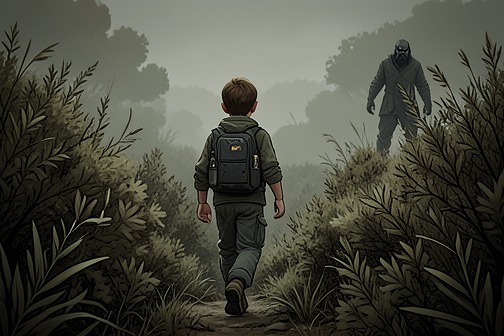
[Neil Spencer abduction](entity:event-recall-event-6e86dcc5e33a) is the disappearance of a nearly seven-year-old boy who is left to walk alone across the outskirts of [Featherbank](entity:location-recall-location-featherbank-8a7b4926752a) and is taken by a stranger who has studied him and prepared a room for his captivity. The event establishes the novel’s central horror not as a sudden intrusion from an entirely unknown world, but as violence made possible by neglect, routine vulnerability, and a predator’s patient observation. It also initiates the police investigation that ultimately distinguishes an accident or family failure from a nonfamily abduction.
## Circumstances and Opportunity
Neil’s abduction begins with a breakdown in ordinary parental responsibility. His separated parents are both alcoholics, and each finds caring for him difficult; Neil is commonly left to occupy and fend for himself. On the day he disappears, his father is too drunk to drive him back to his mother’s house and apparently too ambivalent to accompany him on foot. Reasoning that the boy is nearly seven and has managed alone all day, he allows Neil to make the journey by himself.
The route itself combines familiarity with danger. Neil crosses a patch of shrubland beside Featherbank and the disused [Featherbank Old Quarry](entity:location-recall-location-ec6d2db5be01), an uneven waste ground where children sometimes play despite crumbling quarry sides, fences, and warning signs. The setting is rendered in warm evening light, with dusty ground, dense bushes, and a maze-like arrangement that gives a watcher concealment while leaving a child exposed. The community knows the area is unsafe, yet children have a habit of ignoring barriers and signs; the event therefore grows out of an ordinary, repeatedly tolerated risk rather than an exceptional journey.
The abductor has turned those circumstances into a deliberate opportunity. He has followed Neil quietly behind the bushes, maintaining a constant watch while making no sound. He knows the boy’s school difficulties, social isolation, hand-me-down clothing, anger, and resentment, and has studied Neil and his family “like a project.” He interprets the child’s disruptive behavior as a desire to make an impact, to be noticed, and ultimately to be loved. That interpretation does not make his conduct compassionate: it shows how the language of care can be appropriated by a predator who identifies an unattended child as unusually accessible.
## The Disappearance
Neil is walking slowly and remains unaware that he is being stalked. He occasionally kicks the parched ground, raising a chalky mist around his sneakers, while the man follows with greater care. When Neil stops halfway across the waste ground, the man moves close behind him and then whispers his name. The whisper is the first direct contact in the abduction sequence, turning surveillance into approach while preserving the predator’s control over the scene.
The man has already prepared a room for Neil and suppresses his excitement at the thought of bringing the boy there. The abduction is thus not an impulsive act caused by a chance encounter; it is the culmination of prior observation, preparation, and a decision to exploit the child’s isolation. The contrast between the beautiful evening and the concealed threat intensifies the event’s meaning: a setting associated with leisure and childhood play becomes the threshold of a very different home.
The book also places Neil’s disappearance within the broader statistical reality of child harm. Stranger abduction is described as every parent’s worst nightmare but as highly unusual compared with abuse by family members behind closed doors. Most strangers are decent people, while the home can be the most dangerous place of all. Neil’s case is frightening precisely because it combines both forms of danger: neglect inside the family leaves him unprotected, and a stranger waiting outside recognizes the resulting vulnerability.
## The First Forty-Eight Hours
Neil should have reached home by 6:20 P.M., but poor coordination between his parents means that his absence is not discovered until his mother calls her former husband. He is reported missing at 7:39 P.M., more than an hour and a half after leaving his father’s house. Police arrive at 7:51, by which time the shadows are lengthening and nearly three of the crucial first forty-eight hours have already begun to disappear.
[Pete Willis](entity:character-recall-character-0a3c0fbc4dbc) knows that most missing children are found quickly and safely. Investigators initially divide disappearances into five categories: throwaway, runaway, accident or misadventure, family abduction, and nonfamily abduction. Probability points toward an accident and an early safe recovery, but Pete’s instinct resists that conclusion. His unease is complicated by the bad memories of twenty years earlier, when [Tony Smith](entity:character-recall-character-010676947fb5)’s disappearance remained unresolved. Neil’s case therefore activates both professional judgment and personal trauma before the evidence has established what happened.
DI [Amanda Beck](entity:character-recall-character-4f3dbd72b237) responds by treating the time window as decisive. Her team spends the next twelve hours searching the routes Neil may have taken, interviewing family members, collecting photographs, probing histories, and beginning a profile of the missing boy. At nine the next morning, she holds a press conference with Neil’s parents and releases a description of him and his clothing, encouraging people to inspect garages and sheds. The operation expands from the physical route to the social environment around the family.
## Investigative Reclassification
As more than thirty-six hours pass with no sign of Neil, Amanda works through the five categories and rejects them one by one. She does not believe that Neil’s parents abandoned or disposed of him. An accident should have produced a body or other discovery by then; a family abduction appears unlikely; and she refuses to believe that a six-year-old boy without money or supplies could have successfully evaded the search for so long. The investigation consequently shifts toward nonfamily abduction.
Amanda insists on that term rather than the looser phrase “stranger abduction,” because children in this category are rarely taken by people wholly unknown to them. More often they are befriended or groomed by someone on the periphery of their lives. The police therefore examine friends of the family, families of friends, known offenders, internet activity in the home, and CCTV footage with less attention to Neil as the missing child and more attention to possible predators in the background.
A crucial clue emerges from Neil’s earlier report that he had seen a monster outside his bedroom window. His mother had found the curtains open but no visible figure, and Neil had said that the monster had been whispering to him. The detail transforms the disappearance from an unexplained absence into a pattern of prior contact: someone may have been approaching or communicating with Neil before the evening when he was taken.
## Consequences and Narrative Significance
The public search produces an increasingly visible image of Neil, especially through the circulation of a photograph showing him smiling shyly in a football jersey. News reports display maps, red-circled locations, and yellow-dotted possible routes, converting a private child into a public case. Amanda later watches the press conference at home and sees Neil’s parents as even more beaten down on camera than they had seemed in person. Their visible guilt and devastation create a secondary burden, as the public and the media are positioned to judge parents who were already failing their son without necessarily having caused his abduction.
The case also binds the families of the missing to the investigators’ older wounds. Pete’s memory of Tony Smith’s parents waiting at the police department twenty years earlier returns with particular force: their son was missing, and two decades later he still had not been found. When [Tom Kennedy](entity:character-recall-character-fc7687d172b5) later asks whether Neil has been found, the answer that the police have located the man who came to the family’s house does not satisfy him; he is asking about the child. The distinction between capturing a perpetrator and bringing a child home becomes one of the event’s lasting moral consequences.
The abduction ultimately reveals a predator who initially cares for Neil before murdering him, a sequence that Amanda recognizes as a warning for [Jake Kennedy](entity:character-recall-character-1a02454cdfce)’s captivity. She understands that temporary care does not diminish the danger; it can be part of the mechanism by which the captor establishes control. When the man comes for Jake, the repeated structure of the earlier crime is unmistakable. Neil Spencer abduction is therefore both a completed tragedy and the pattern through which the later threat is understood: a neglected child, a prepared room, a whispering approach, and the catastrophic delay created when adults fail to notice that a child has not come home.
Event 3
Neil Spencer body discovery

[Neil Spencer body discovery](entity:event-recall-event-4caca8e8e5fb) is the decisive forensic and emotional turning point in the investigation into [Neil Spencer](entity:character-recall-character-430aa3d8892d)’s disappearance. Two months after Neil was abducted, [Pete Willis](entity:character-recall-character-0a3c0fbc4dbc) enters a pitch-black waste ground and finds the boy’s body beneath a canopy of floodlights. The discovery confirms that Neil is dead, but it also supplies the first tangible evidence that the killer has adopted a deliberate pattern of concealment, delayed return, and symbolic placement. For Pete, the scene transforms an unresolved search into a confrontation with failure, memory, and the obligation to bring a child home.
## Causes and Background
Neil Spencer had been missing for two months before his body was found. The discovery therefore answers the most devastating question in a missing-child case while leaving the practical and moral questions of investigation unresolved: where Neil had been held, who had killed him, why his body had been returned, and whether the person responsible was connected to the earlier crimes associated with [Frank Carter](entity:character-recall-character-28c9657c3214). Pete’s recollection of Carter’s words gives the scene a retrospective charge. Carter had said, “It always comes back to me for you, doesn’t it? [It always ends where it starts](entity:expression-recall-expression-it-always-ends-whe-a56ac6436e85).” Pete now understands those words as a message designed to be recognized only after the fact, rather than as casual speech.
The setting also links the discovery to the original abduction. As Pete approaches the canopy, he sees the officers’ silhouettes and recognizes the waste ground as the place from which Neil had been taken. He states, “This is where he was taken from,” although [Amanda Beck](entity:character-recall-character-4f3dbd72b237) cautions that they cannot know that for certain. Pete remains convinced. The location thus functions as both crime scene and returned point of origin: the place where the investigation began becomes the place where Neil’s death is finally made visible.
## What Happens
Pete walks slowly into the darkness with a flashlight, carrying a powerful sense of sickness and foreboding. The physical movement mirrors his psychological state. He is not merely arriving at a new scene; he is entering the consequence of an earlier failure, convinced that he should have understood Frank Carter’s words sooner. The floodlights reveal the canopy and the officers around it, but their brightness does not make the scene easier to face. Pete finds there is almost too much light for what lies at the center.
Under the canopy, Pete and Amanda move toward the boy’s body. Neil is lying spread-eagled beside an old television with a pockmarked screen, and his backpack rests on the ground nearby. His blue tracksuit pants remain visible, while his Minecraft T-shirt has been pulled over his face, turning the design inside out. The clothing and backpack identify the body through ordinary objects associated with a child’s daily life, while the positioning of the body and the covered face make the scene deliberately arranged rather than simply abandoned.
The physical evidence immediately distinguishes this death from Frank Carter’s murders. Pete observes that there is no real blood, or not enough blood to account for the injuries, and concludes that Neil was killed elsewhere. Amanda agrees that the body appears to have been moved. Pete recalls that Carter killed children where he found them and kept them in his house, whereas Neil’s killer held him elsewhere, cared for him for a period, and then changed course. Neil had been kept alive for two months before being killed and returned to the place of his abduction. Pete interprets the return as resembling a present that had been given away and then rejected, an image that makes the body’s placement feel both calculated and disturbingly personal.
## Evidence and Investigation
The scene provides several connected evidence points rather than a single conclusive clue. Neil’s clothing, backpack, covered face, the old television, the absence of sufficient blood, and the location itself allow Pete to reconstruct a movement from abduction to captivity, killing, and postmortem return. The body’s condition indicates that the killing did not occur where Neil was found, while the placement at the original site suggests that the offender wanted the discovery to be linked visibly to the disappearance.
The discovery also helps investigators separate the new offender from Frank Carter. The contrast is not merely stylistic. Carter’s known method involved killing children at the locations where their bodies were found and retaining them in his house. Neil’s killer instead appears to have maintained a hidden period of captivity, then transported the body back to the starting point. This difference prevents the investigation from treating every new fact as a repetition of the old crimes and forces Pete and Amanda to consider a distinct criminal pattern.
The body discovery eventually contributes to the broader chain of investigation that reaches toward Frank Carter’s family and network. Later evidence shows that [Norman Collins](entity:character-recall-character-50cf1f055de4)’s fingerprints were found on the hammer used to murder [Dominic Barnett](entity:character-recall-character-36422c319cfe), and a search of the [Rose Terrace Primary School](entity:location-recall-location-rose-terrace-primary-ccae47d1282f) investigation reveals that the man interviewed as George Saunders had convincingly presented himself after Neil’s disappearance despite having no alibi for the precise abduction period. The real George Saunders had died three years earlier. These later revelations do not alter what the body scene establishes, but they show how Neil’s remains become an evidentiary bridge from a local search to a wider structure of concealment, false identity, and connected violence.
## Consequences and Aftermath
The discovery changes Neil’s status from missing child to identified murder victim, but it does not provide complete closure. The scene confirms death without immediately explaining the cause, the place of captivity, or the offender’s full motive. Pete’s certainty that Neil was returned like an unwanted gift captures this incomplete justice: the child has been found, yet the meaning of what was done to him remains something the investigators must labor to reconstruct.
The emotional cost falls on more than the police. Pete has already seen what prolonged uncertainty does to families. Twenty years earlier, [Miranda Smith](entity:character-recall-character-1cd518230f6c) and [Alan Smith](entity:character-recall-character-9f7e57d759aa) had sat in a police reception exhausted by the disappearance of their son [Tony Smith](entity:character-recall-character-010676947fb5), who remained missing even after Frank Carter was arrested and admitted killing him. Neil’s discovery therefore carries a double significance. It demonstrates the value of recovering a body, because the dead child can finally be named and cared for, while also reminding the investigation that identification is not the same as restoration. Pete’s principle is that everyone should get to go home; Neil’s return to the place of abduction is a grotesque imitation of that hope, and the real task becomes returning him properly through truth, identification, and dignity.
The forensic examination reinforces the ethical importance of treating the remains as a child rather than merely as evidence. Dale explains that the bones have been laid out in the shape of a small child, although time has separated many of them and no flesh remains. He identifies the remains as those of a male child around six years old who has been dead for some time, possibly twenty years, while acknowledging that the cause of death may never be known. Pete finds skeletons easier to view dispassionately than recently deceased bodies, yet the bones still force him to confront the fact that a person can become only scattered objects and possessions. The backpack and clothing beside Neil’s remains preserve the human scale that the skeleton alone threatens to erase.
## Narrative and Thematic Significance
Neil Spencer body discovery is structured around recurrence and reversal. The investigation returns to the place where Neil was taken, but the repetition is not restorative. The same location now contains the evidence of what happened after the abduction, turning the beginning of the case into its most terrible confirmation. Frank Carter’s phrase about endings and beginnings becomes a pattern governing both the plot and Pete’s sense of professional guilt.
The event also distinguishes punishment from restorative justice. Arresting a killer may protect the community, but the body’s recovery addresses another obligation: to identify the victim, end the indignity of concealment, and give the child a place within the truth of his own story. Pete’s insistence that everyone should get to go home is tested by a return that is physically exact but morally wrong. Neil has been brought back, yet only the investigation can make that return meaningful.
Finally, the discovery turns watching into a form of responsibility. Pete must look at the clothing, the backpack, the covered face, the blood pattern, and the position of the body without allowing professional detachment to become erasure. Amanda’s presence beside him and her later promise to [Tom Kennedy](entity:character-recall-character-fc7687d172b5) that the police will find [Jake Kennedy](entity:character-recall-character-1a02454cdfce) extend that responsibility from Neil to another endangered child. Neil’s body is therefore not only the endpoint of one search; it becomes the warning that drives the next one, binding evidence, trauma, and the determination to prevent another child from being lost.
Event 4
Tony Smith remains discovery
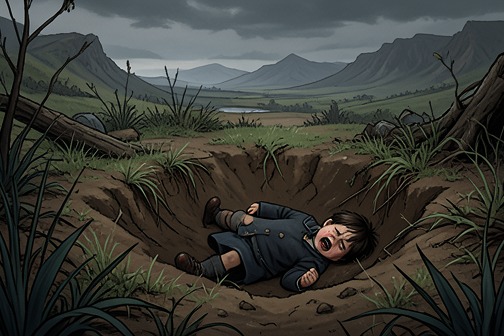
[Tony Smith remains discovery](entity:event-recall-event-7db866e26d4b) is the decisive recovery of the child whose disappearance had remained unresolved for twenty years. It does more than locate a body: it restores [Tony Smith](entity:character-recall-character-010676947fb5) to the case as a named child, supplies physical evidence of the hidden criminal network surrounding [Frank Carter](entity:character-recall-character-28c9657c3214), and gives shape to the difference between arresting a killer and bringing a missing child home.
## Background and Long Delay
Tony Smith disappeared when he was a child, leaving his parents, [Miranda Smith](entity:character-recall-character-1cd518230f6c) and [Alan Smith](entity:character-recall-character-9f7e57d759aa), trapped in an absence that never acquired the finality of confirmed death. They had been seen exhausted in a police reception while their son was missing, and twenty years later he still had not been found. Frank Carter had admitted killing Tony Smith after his arrest, but he refused to say where he had discarded the remains. His van contained forensic evidence that Tony Smith had been held in it, yet the absence of a body left the crime suspended between confession and confirmation.
The delay shaped the emotional meaning of the discovery. [Pete Willis](entity:character-recall-character-0a3c0fbc4dbc) had spent years searching hedgerows and woodlands many miles from [Featherbank](entity:location-recall-location-featherbank-8a7b4926752a), imagining that the answer might lie somewhere remote. When older remains eventually surfaced close to home, the revelation was not simple relief. It forced him to confront the possibility that the search had been directed away from the truth for two decades, while Tony Smith had been concealed far nearer to the community that had been looking for him.
## Discovery in the Garage
The remains were found beneath the garage floor of a house on Garholt Street. A large section of the floor consisted of unevenly arranged house bricks, covering an old mechanic’s pit that had been filled in to create a flat surface. When one brick was lifted, the opening revealed the top of a cardboard box beneath it. More bricks were removed until the box could be drawn out; it was the same size as other boxes in the garage and had been sealed with parcel tape.
The box was opened with a sharp key. Inside were bones and a small skull. A brightly colored butterfly rested among them, its wings moving gently. The butterfly’s presence provides the discovery with an unsettling visual contrast: a living, delicate movement beside the material remains of a child whose life had been reduced to bones. The scene turns a concealed object into a direct encounter with death, while the skull makes the missing child’s physical presence impossible to evade.
Pete Willis reported the development from the house on Garholt Street as a second body. The second discovery was much older than the first and appeared to have been hidden for a long time. That distinction linked the scene to the older crimes rather than treating it as an isolated contemporary killing.
## Forensic Identification and Physical Evidence
The forensic examination established that the remains belonged to a male child who had been around six years old at the time of death. A full postmortem had not yet taken place, so the cause of death could not be determined and might never be known. The remains had nevertheless been deceased for a period that could plausibly reach twenty years, matching the chronology of Tony Smith’s disappearance.
The bones had been laid out in the shape of a small child, although time had separated many of them and no flesh remained. The forensic presentation emphasizes both distance and recognition. A skeleton can appear less immediately human than a recent corpse, yet the fact of death remains unmistakable: after enough time, a person is represented by bones and by the possessions left with them.
The box itself preserved additional evidence. Clothes had been stored underneath the bones and were recovered in a carefully extracted, intact pile. Pete recognized blue jogging pants and a little black polo shirt. At another related scene, investigators had noted a blue tracksuit and a Minecraft T-shirt pulled over the face of a boy’s body, with little or no blood at the location and not enough for the injuries, indicating that the child had been killed elsewhere. That contrast helped investigators distinguish the new offender’s method from Frank Carter’s established pattern, but the older clothing recovered from the box provided the material connection to Tony Smith.
## Link to [Norman Collins](entity:character-recall-character-50cf1f055de4) and the Carter Network
The discovery implicated Norman Collins, who had been obsessed with Frank Carter and his crimes. Collins had visited a friend of Carter’s in prison and had been stalking the house where the second body was found. Pete Willis became convinced that Collins had known the body was there. The official identification was still pending, but the accumulated circumstances made him certain that the remains belonged to Tony Smith.
Collins later described what happened after he went to the house on Garholt Street. He paid [Julian Simpson](entity:character-recall-character-25d6931afb52) additional money and was made to wait in a downstairs room. Simpson eventually returned with a sealed cardboard box, opened it carefully, and showed him the remains. When asked to identify them for the record, Collins named Tony Smith. His account transformed the discovery from a hidden burial into evidence of a chain in which the remains had been retained, transferred, and viewed by people connected to the wider exploitation of Carter’s crimes.
The investigation also tied Collins to a more recent murder. [Amanda Beck](entity:character-recall-character-4f3dbd72b237) told him that his fingerprints had been found on the hammer used to murder [Dominic Barnett](entity:character-recall-character-36422c319cfe). Collins responded with no comment, while the discovery of Tony Smith’s remains supplied a separate, older strand of evidence against him. The case therefore widened from locating a long-missing child to exposing the people who had known about, handled, or profited from the hidden remains.
## Consequences and Significance
For Pete Willis, Tony Smith’s recovery should have brought relief and closure, because he had searched for the boy for so long. Instead, it carried grief, self-reproach, and the shock of proximity. Tony had not been found in the distant landscapes Pete had repeatedly searched; he had been concealed near Featherbank, within the ordinary world that had continued around the disappearance.
The discovery also changes the meaning of justice. Frank Carter had already been arrested and had admitted killing Tony Smith, but punishment had not returned the child to his family or answered the question of where he had been left. The recovered bones, clothing, and eventual naming of Tony Smith provide a different kind of resolution: the missing child can finally be treated as a person whose remains deserve protection rather than as an unsolved absence or an object in someone else’s collection.
That ethical shift is reflected in the forensic handling of the remains. Dale described them as being under his protection, with the indignities inflicted on them now over. The bones were no longer hidden in a sealed box beneath a garage floor or circulated through the criminal network. They had entered a process of care, examination, and identification. The discovery therefore closes one form of concealment while opening the possibility—however incomplete—of dignity, truth, and a return home for Tony Smith.